Design Systems · Migration Strategy
A structured approach to moving a design organization off Sketch and onto Figma without interrupting active product delivery. From a full ecosystem audit through governed, measured adoption, training .

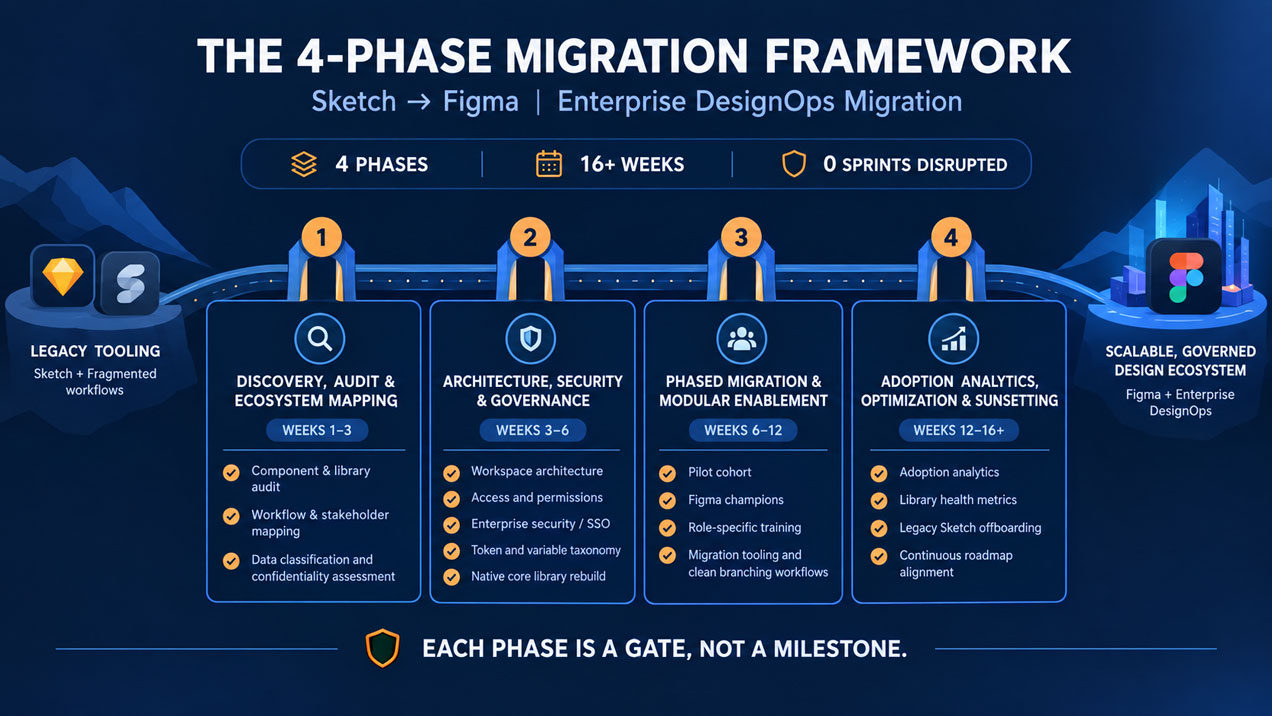
Migrating a design organization's tooling is rarely a file-conversion problem — it's an organizational one. This framework sequences the work so technical debt doesn't cross the bridge from the old system into the new one, governance is in place before production work moves, and adoption is driven by teams' compliance needs and evidence rather than a mandate. Each phase builds the foundation the next one depends on.
Evaluate the current state, establish baseline metrics, and prevent moving technical debt from Sketch into Figma.
Catalog active vs. orphaned Sketch symbols, UI kits, and local file dependencies.
Interview designers, producers, and engineering leads to map current handoff friction and identify team-specific sprint constraints.
Categorize design assets by confidentiality level to inform workspace access rules.
Establish a secure, scalable foundation before migrating active production work.
Define enterprise teams, project structures, and permission tiers — including SAML/SSO integration and IP restrictions for sensitive product lines.
Structure primitive, semantic, and component-scoped variables in Figma, mapping 1:1 to code tokens.
Rebuild core components natively using Auto Layout 5.0, variants, and component properties, rather than relying on automated 1:1 symbol imports.
Drive adoption and migrate active product lines in waves without disrupting sprint delivery.
A phased rollout starting with a pilot team and internal "Figma Champions," followed by core product verticals, and ending with broader cross-functional stakeholders.
Short, asynchronous video modules and role-specific cheat sheets, paired with drop-in office hours.
Transition active files to Figma, establishing clean branching workflows for library maintainers.
Measure success, optimize governance, and deprecate legacy tooling.
Track active users, component insertion counts, and detachment rates to identify friction points.
Enforce a progressive deprecation timeline for Sketch licenses once teams achieve 100% operational fluency in Figma.
Bi-monthly syncs with internal DesignOps and Figma's enterprise team to cascade incoming platform features.
After the work of Sketch to Figma has been established, the next step is using it as a scalable operating model that aligned Product, UX, Engineering, and Platform teams before publishing reusable components, ensuring consistency, accessibility, and enterprise-wide adoption.
From establishing a new pattern of design templates and components in Figma from Sketch, reviewing and creating component request through enterprise adoption, governance ensured every published component met design, engineering, accessibility, and business standards before entering the Design System.
Each phase is a gate, not a milestone. Governance is set before files move, training exists before teams are asked to rely on it, and legacy tools are retired only once fluency is proven — not assumed. That ordering is what keeps a 16-week migration from becoming a disruption to the work it's meant to support.